%404x.png)
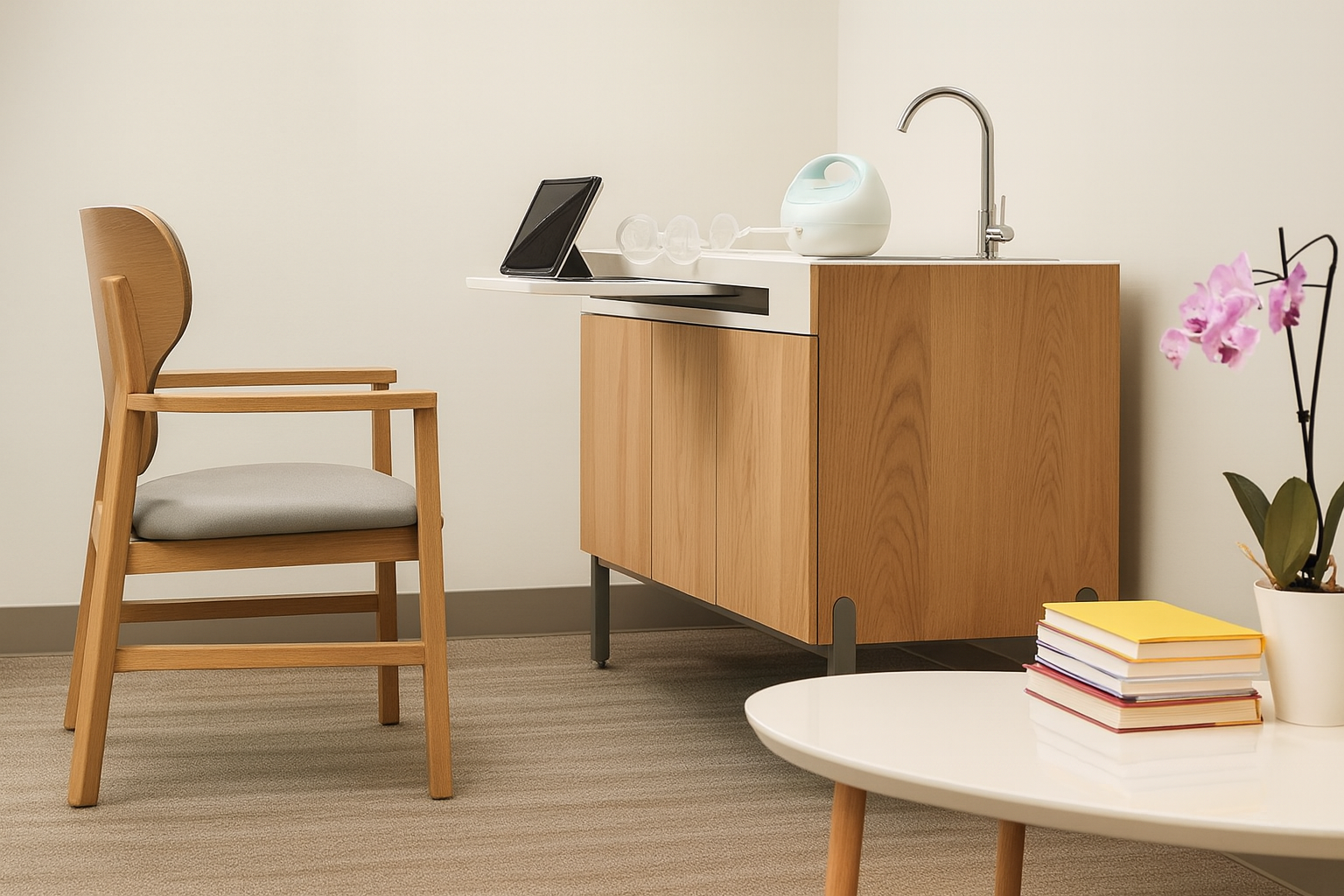
The first week back at work after having a baby can feel oddly loud, even when the office is quiet. Keyboards click, lights hum, someone reheats lunch in the microwave. For employees who are pumping, the need for a reliable lactation station shows up fast. Not as a perk, but as a basic condition that allows people to work, focus, and stay healthy. In shared workplaces especially, a well-designed lactation station quietly holds together privacy, hygiene, and efficiency, all at once.
You might notice that conversations around workplace lactation often sound legalistic or overly sentimental. The truth lives in the middle. This is about compliance, yes, but also about bodies, schedules, stress levels, and dignity. It is about whether a parent can do their job without scanning the hallway for an empty conference room or sitting in a car with the engine running for warmth.
So what does this really look like on the ground?
Privacy is not optional; it is structural.
Let’s start with privacy, because it is the part people think they understand, and often get wrong.
Federal law in the United States requires employers covered by the Fair Labor Standards Act to provide a private space, other than a bathroom, for employees to express breast milk. This requirement was strengthened under the PUMP for Nursing Mothers Act, which expanded protections to nearly all employees and clarified enforcement mechanisms. The space must be shielded from view and free from intrusion by coworkers or the public.
That sounds simple until you picture a busy office or warehouse.
A true lactation station is not a folding screen in a supply closet. It is not a shared wellness room that anyone can wander into mid-pump. It is a space with a lock, a clear signal when it is in use, and enough separation that someone can breathe without worrying about footsteps outside the door.
Privacy supports more than modesty.
It lowers cortisol. It allows letdown to happen more easily. Anyone who has tried to pump while anxious knows how stubborn the body can be. Milk flow responds to calm, not urgency.
In shared workplaces, privacy also protects coworkers. Clear systems reduce awkwardness, guessing, and unintentional interruptions. Everyone knows the rules, the space, the boundaries.
Here’s the catch. Privacy must be predictable.
Employees should not have to renegotiate their right to a private space every shift. A dedicated lactation station removes that daily friction.
Hygiene is about trust, not just cleanliness.
Hygiene often gets reduced to wipeable surfaces and hand sanitizer. Those matters, but the deeper issue is trust.
Expressed breast milk is food. It is also a bodily fluid. That combination raises the stakes.
A well-designed lactation station includes:
- A comfortable chair with a non-porous surface
- A flat surface for pump parts and personal items
- Access to electricity for pumps
- Nearby access to a sink for washing hands and equipment
- A refrigerator or clearly designated cold storage option for milk.
Federal law does not require employers to provide a sink or refrigerator in the lactation space itself, but many state laws and best practice guidelines strongly encourage it. Some states go further, specifying proximity requirements or sanitation standards. This is where employers often stumble, relying on minimum federal language while missing local obligations.
Hygiene also shows up in policies.
Clear cleaning protocols. Shared responsibility for wiping surfaces. Signage that explains expectations without shaming. These details signal respect. They tell employees that their milk, their time, and their health matter.
One small but telling detail I have seen work well is a closed bin specifically for pump wipes and disposable items. It sounds minor. It changes the whole feel of the room.
And yes, sometimes the fridge hums too loudly or the soap dispenser runs empty. It is not a cure-all. But effort counts.
Efficiency keeps people working, not disappearing
Here is where HR leaders often lean in.
Efficiency is not about rushing parents through pumping breaks. It is about removing barriers so they can return to work focused, not flustered.
Under federal law, employers must provide reasonable break time for pumping as needed, for up to one year after a child’s birth. “As needed” matters. Pumping schedules vary. Supply fluctuates. Stress, meetings, commute times, all of it plays a role.
When employees have a reliable lactation station, pumping becomes part of the workday rhythm, not a disruptive event. They do not need to wander the building looking for space. They do not need to explain themselves repeatedly. They can plan.
Efficiency also benefits teams.
Predictable breaks allow managers to schedule coverage. Clear policies reduce resentment or confusion among coworkers. Everyone understands that pumping breaks are protected, not favors.
Many people swear by scheduling pumping time directly on their calendar. That only works when there is a space to match the schedule.
This is where solutions like Nessel come in. Instead of asking employers to retrofit ad hoc rooms or manage access manually, Nessel provides turnkey lactation stations designed for shared environments. The goal is simple. Make compliance easy, and make life easier for employees.
The emotional layer no policy captures
Returning to work after having a baby is not just a logistical shift. It is emotional, physical, and sometimes raw.
People worry about supply. They worry about leaking through shirts during meetings. They worry about being seen as less committed. Even in supportive workplaces, those worries linger.
A lactation station cannot fix all of that. But it can send a powerful message.
It says, we planned for you to be here.
That matters.
I remember sitting on a carpeted floor years ago, back against a locked door, listening for footsteps while trying to relax enough to pump. The carpet smelled faintly of cleaning solution and old coffee. It was not ideal. That memory is not unique.
When employers invest in proper lactation stations, they reduce that invisible strain. They normalize care. They make room, literally and figuratively, for parents to stay.
Legal compliance, without the panic
Let’s ground this in law for a moment.
At the federal level, the PUMP for Nursing Mothers Act amended the Fair Labor Standards Act to require:
- Reasonable break time for pumping, as needed
- A private space, not a bathroom, shielded from view and free from intrusion.
- Coverage for nearly all employees, including salaried workers
Employers with fewer than 50 employees may claim undue hardship, but the bar is high and requires case by case analysis.
State laws can and do add layers. Some require lactation accommodations beyond one year. Others mandate specific amenities or written policies. Employers operating in multiple states must track these variations carefully.
This is where outdated information causes real risk. Guidance from a decade ago may not reflect current enforcement trends. Agencies are paying closer attention to lactation rights, and complaints can escalate quickly.
The takeaway is not fear. It is preparation.
Having a compliant lactation station reduces legal exposure and demonstrates good faith. It shows that policies are backed by infrastructure.
Shared workplaces need shared solutions.
Not every workplace has spare offices or extra square footage. Co-working spaces, warehouses, manufacturing floors, healthcare facilities, and retail environments all face constraints.
Shared lactation stations address that reality.
They centralize resources. They standardize access. They allow multiple employees to benefit without each department reinventing the wheel.
Design matters here.
Sound insulation. Ventilation. Clear occupancy indicators. Easy booking or first-come systems. These details prevent conflict and keep the space usable.
Nessel’s approach reflects this thinking. Their stations are designed to drop into existing environments without major construction, while meeting legal and human needs. It is a practical answer to a common pain point.
What employees actually ask for
When you listen to parents, certain themes repeat.
They want:
- Privacy that feels real, not symbolic
- Clean spaces that do not require mental gymnastics
- Predictability in access and scheduling
- Managers who understand the basics, without awkward over-explanation
You might notice that none of this sounds extravagant.
It is about removing friction.
The ripple effects
Supporting lactation at work has broader impacts.
Retention improves. Absenteeism drops. Employees feel seen. Families benefit from sustained breastfeeding if that is their goal, with well-documented health outcomes for both parents and children.
It also shapes culture.
When new hires see a dedicated lactation station, they read it as a signal. This is a place that plans. This is a place that expects employees to have full lives.
That reputation matters in competitive labor markets.
So what does this mean for employers
It means moving past the bare minimum.
Compliance is the floor. Experience is the ceiling.
Employers who invest in proper lactation stations find that the return shows up quietly. Fewer complaints. Smoother schedules. Less improvisation. More trust.
It is not flashy. It is solid.
And yes, sometimes the lock sticks or the chair needs replacing. That is real life. The point is commitment.
Why workplaces choose Nessel lactation rooms
At Nessel, we build lactation rooms that actually work in the real world, not the idealized HR handbook version. Our lactation stations are designed for shared workplaces where space is tight, schedules overlap, and privacy cannot be an afterthought. Each room is purpose-built to meet legal requirements while honoring the lived experience of pumping at work, the need to sit down, exhale, plug in, and feel unobserved for a few minutes.
We think about the things people rarely say out loud. Sound bleeds. Cleanable surfaces that do not feel clinical. Doors that lock the way you expect them to. Clear signals that the space is occupied, so no one knocks. It is not flashy. It is thoughtful. And it holds up day after day.
Our products are not meant to replace policy or culture; they make both easier to uphold. When employers install a Nessel lactation room, compliance stops being a scramble and starts being part of the infrastructure. Employees know where to go. Managers know what to point to. HR teams stop improvising. Parents get time back and a little peace of mind.
If your workplace is growing, shifting, or finally ready to move beyond makeshift solutions, we would love to help. Explore Nessel’s lactation rooms and stations to see how they fit into your space, your workforce, and your compliance goals. Supporting parents at work should feel solid, intentional, and human, not like something patched together at the last minute.


%404x.png)
